
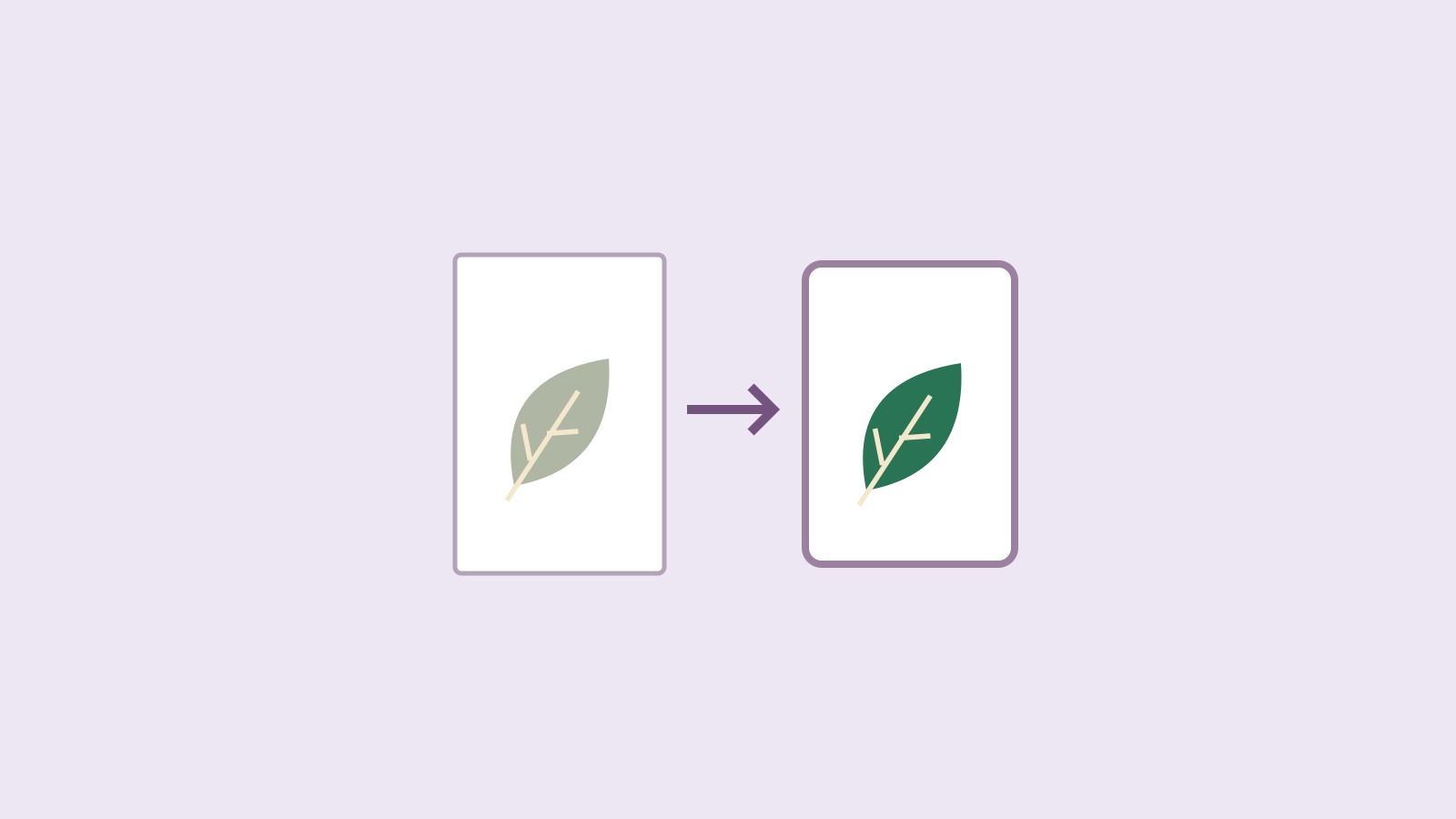
A sublimation transfer can look subdued on paper before it is transferred to the product. That sheet is an intermediate stage, not a finished colour proof. A faded-looking sheet and a disappointing finished item are therefore two different questions.
Before asking for brighter artwork or stronger colours, establish what you are looking at: the original design, the printed transfer or the completed item.
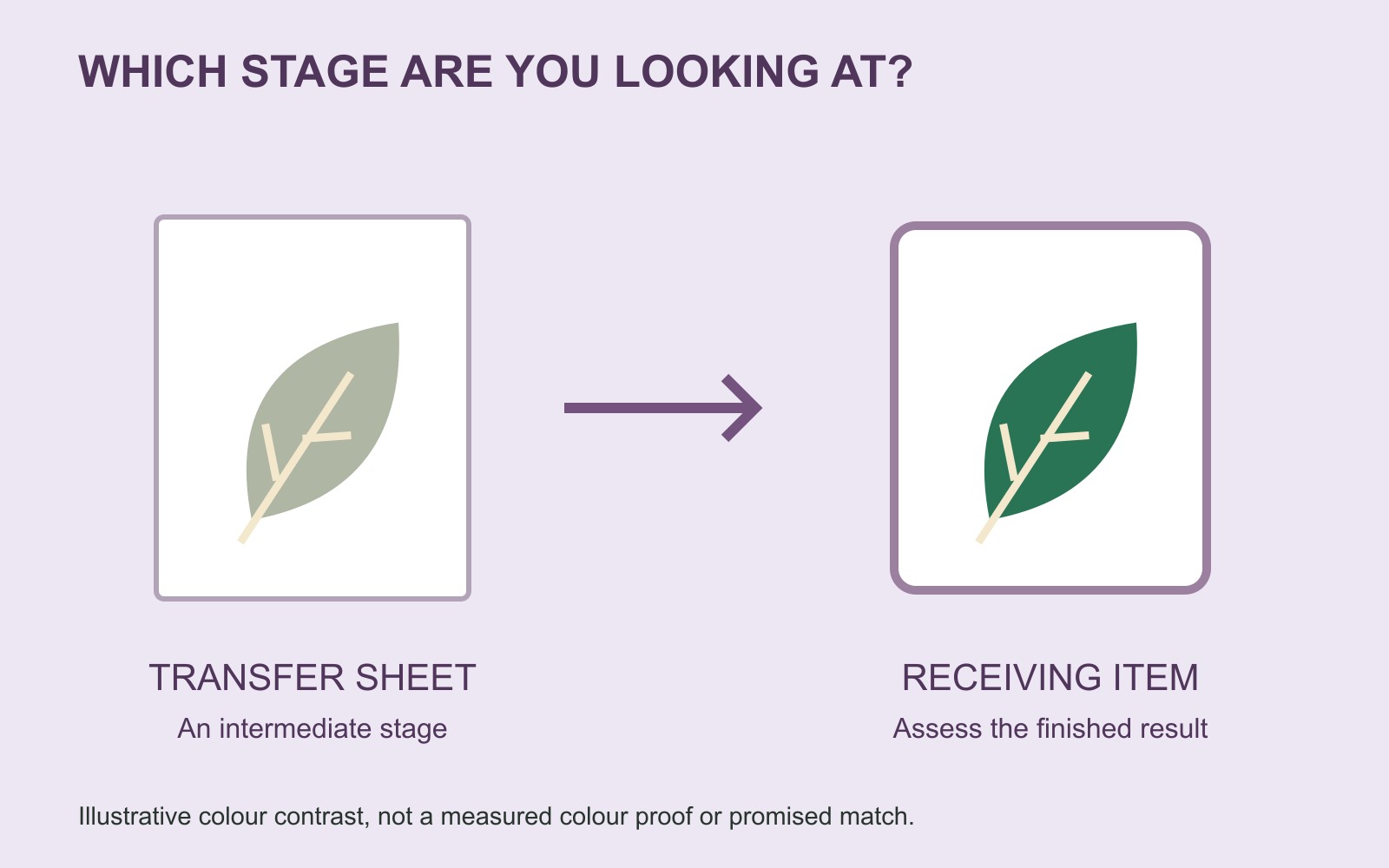
The paper carries the image to another surface
In conventional transfer sublimation, the design is printed onto appropriate transfer paper, then transferred using controlled heat to a compatible receiving material. The sheet is part of that process rather than the object the customer will keep.
Johnson Plastics Plus’s sublimation FAQ explains that sublimation ink can look washed out before transfer and that the paper is designed to hold and release ink when heated. This explains why the paper should not be judged as though it were the finished print.
It does not prove that every pale sheet is correct, or that the completed item will match a phone screen exactly. A broad statement about the normal stage of a process is not a diagnosis of an individual file or job.
Three views, three useful questions
The digital artwork: are the photograph, wording, crop and layout the intended ones? Check the name and date here; waiting for stronger colour will not correct a spelling mistake.
The transfer sheet: is this being shown as a production-stage reference? Ask what the sheet is intended to demonstrate. Its appearance alone should not silently become the agreed colour standard.
The completed product: does the result meet the agreed requirement on the specified item? That is a different assessment from deciding whether the untransferred paper looks vivid.
For example, imagine a personalised item using a blue flower photograph. A photograph of the transfer sheet looks muted, so somebody edits the source image to add more saturation. There are now two artwork versions, but no clear agreement about what needed correcting. Naming the stage first would have made the question more precise.
Avoid compensating in the artwork by guesswork
Keep the original design and identify any proposed adjustment separately. Explain the concern rather than applying a blanket change to every colour. “The finished flower looks different from the agreed reference” gives the person preparing the job more useful information than “make everything brighter”.
If the finished result is the concern, the actual workflow needs assessment. Sawgrass’s colour-troubleshooting guidance considers software colour settings, print workflow and ink or output problems within its own system. It supports investigating several possible causes, rather than diagnosing all dull colour as an artwork problem.
Do not borrow a universal time or temperature from an unrelated item. The appropriate receiving material and production instructions still matter. Our introduction to sublimation explains those material limits in more detail.
Make the approval question explicit
When shown a preview, ask what it confirms. A digital layout may establish placement and wording. A photograph of an intermediate sheet is not the same evidence as the finished product. If a particular colour is important, agree how that requirement will be assessed before approval.
For a personalised merchandise enquiry, send the original photograph or artwork, identify the intended item and explain any important colour requirement. The useful distinction is simple: a subdued transfer sheet can be normal, while the suitability of the completed item still deserves its own check.
Sources: Johnson Plastics Plus’s technical FAQ and Sawgrass’s system-specific troubleshooting guidance. The flower example is fictional; no colour-match or product-performance guarantee is implied.