
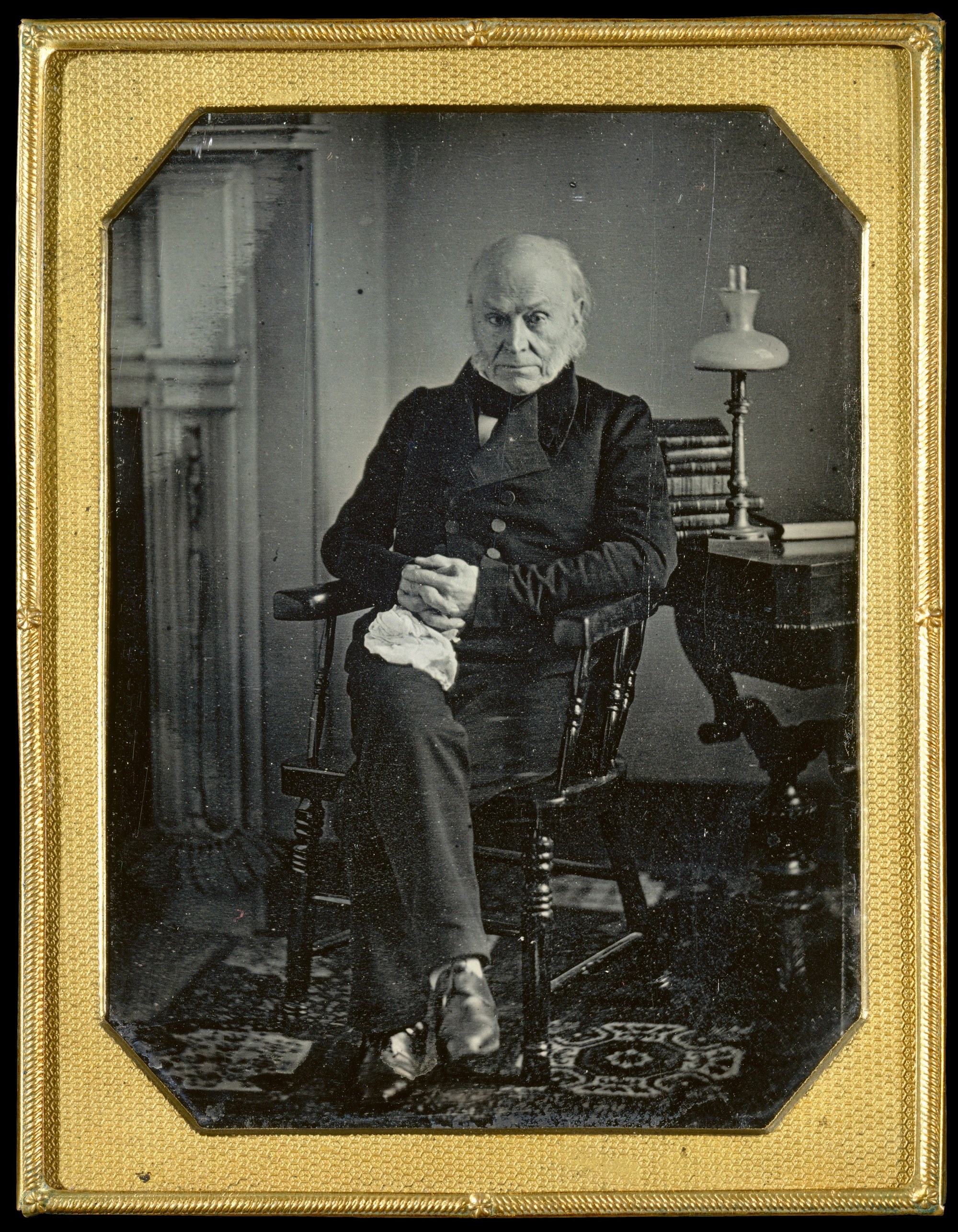
A daguerreotype was a unique photographic object. That did not make its picture impossible to copy. The distinction becomes clear in a portrait of John Quincy Adams at the Metropolitan Museum of Art: a daguerreotype catalogued as Southworth and Hawes, after Philip Haas, about 1850.
“After” matters. The museum credits both the studio responsible for this object and the maker of the earlier image. The plate can be a genuine historical daguerreotype while also carrying a copied portrait. Its originality as a physical object is a different question from the origin of its composition.
The camera plate was the photograph
The Library of Congress describes the process as making an image on silver, or silver-plated copper, without a negative. The polished plate went into the camera. After processing, that same plate held the photograph.
There was no separate negative from which to make a succession of positive prints. This is the material sense in which each daguerreotype was unique. It describes how the object was made; it does not establish that nobody could photograph its image again.
Daguerre’s process entered public life in 1839. As Malcolm Daniel’s history for The Met explains, the January presentation of examples preceded the detailed public explanation in August. The highly polished, silver-plated copper surface was central to the invention. It was both the photographic support and a reflective surface that the viewer had to negotiate.
One portrait, two dates
The Adams object makes the distinction between image and plate unusually tangible. The current museum record dates the surviving daguerreotype to about 1850. That date belongs to this object, not necessarily to the earlier portrait it reproduces.
In his study of the portrait’s attribution, Beaumont Newhall identified a clue in the plate’s manufacturer’s mark. He associated its company name with 1850 or later. Adams had died in 1848. If that dating of the mark was right, this could not be the plate exposed during his sitting.
Newhall connected the earlier image to Haas in Washington in 1843, using a matching, identified portrait, a contemporary lithograph and reported diary evidence. The present catalogue preserves the distinction in its attribution: Southworth and Hawes, after Haas.
Reading the photograph therefore involves more than identifying the face. A date can refer to a sitting, a later photographic copy or another reproduction. Collapsing those stages into one date changes the object’s history.
Pointing a camera at another photograph
Copying did not require a hidden negative. A photographer could put an existing daguerreotype in front of a camera and make another daguerreotype of it. The new camera plate became another individual object carrying the earlier picture. Newhall describes this copying practice.
The reflective surface made that apparently simple arrangement awkward. A practitioner’s letter in the 1851 Daguerreian Journal shows the problem from the working photographer’s side. Jas. Bennett Sykes described positioning the picture so sunlight fell obliquely across the plate. He said this reduced reflections and made the image clearer in the camera, even when the original was faint.
That is an account of a practitioner’s method, rather than a controlled test. Its value here is the problem it reveals. The camera needed to record the picture on the metal, while reflections from that metal could interfere. Copying involved arranging light and object, not simply placing an ordinary paper print on a stand.
A mirror complicates the word “positive”
The same surface affected ordinary viewing. The V&A’s guide to photographic processes explains that a daguerreotype is best viewed at an angle that minimises reflections. A picture that seems difficult to see from one position may become clearer from another.
Newhall adds a qualification to the term “direct positive”: the image can appear positive against a reflected dark field and negative against a bright one. That is a change in appearance with reflected surroundings, not a new chemical transformation of the photograph.
A digital reproduction fixes one photographic view of this reflective object. Scrolling past the museum’s image does not reproduce the experience of moving around the actual plate. Nor can this single reproduction show every viewing condition that a copying photographer had to manage.
The useful question is therefore more precise than “Is it an original?” Original plate from a sitting, historical photographic copy and modern digital reproduction describe different stages. The Met’s Adams portrait is compelling because its attribution keeps two of those stages visible. A unique object can preserve an image that already had a history.
Sources
The Met’s current John Quincy Adams record identifies the object, makers and date. Newhall’s attribution study explains the copy evidence. The Library of Congress process account, V&A process guide and Sykes’s period correspondence supply the material and practical context.