
A letter can fit inside an envelope while its address sits partly outside the window. The overall format and the opening's position answer different questions.
Identify the actual envelope and the intended inserted document together before changing the letter layout.
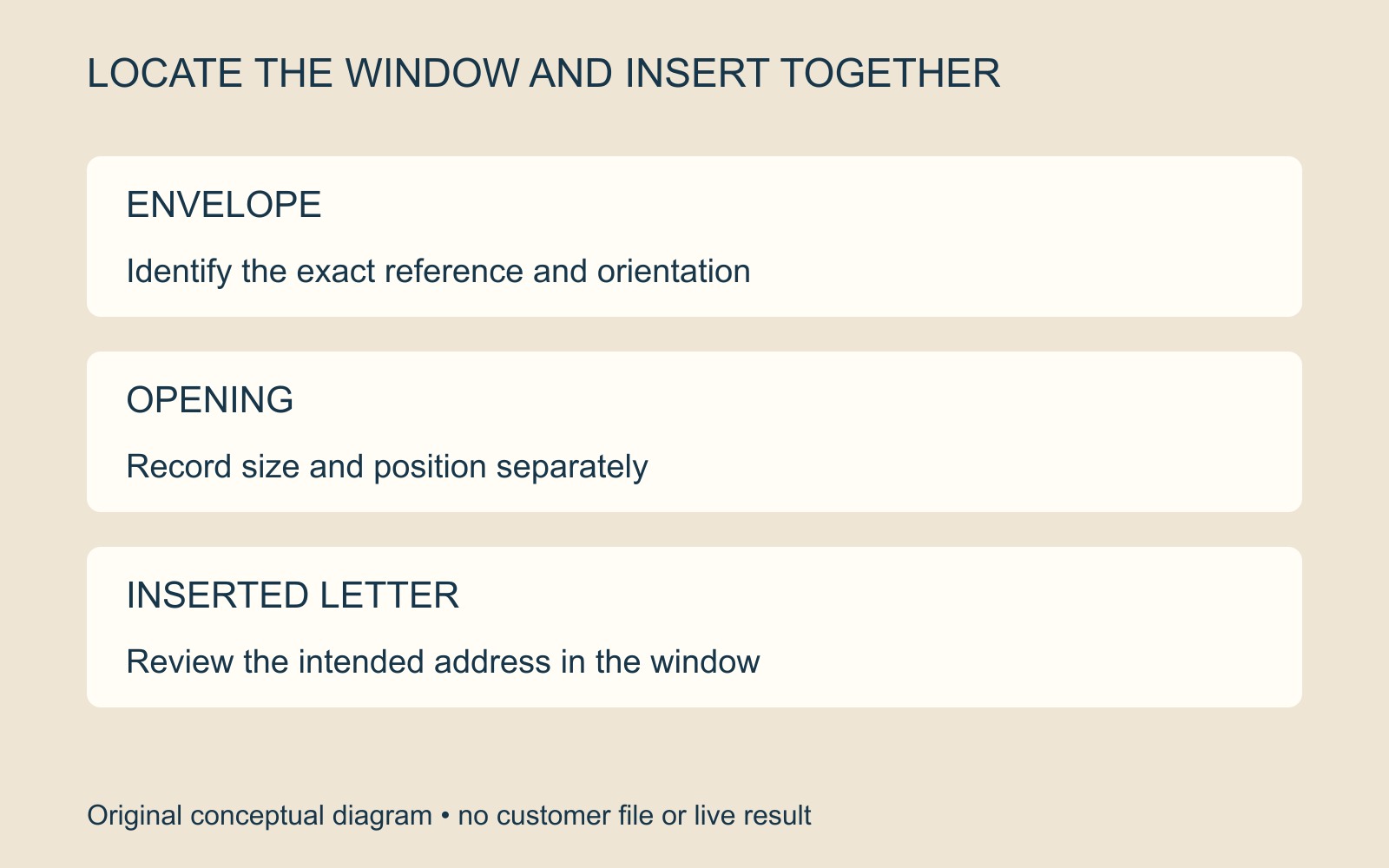
Locate the opening as well as the envelope edges
Paper and packaging distributor Antalis' envelope guide (PDF, page 5) describes measuring the window with the flap at the top and locating its position from the bottom and left. Its earlier ordering questions also distinguish window positions and the need to measure them carefully.
That gives the discussion a reference orientation. Record the opening's width and height separately from its offsets, and confirm the measurement convention with the provider. “Window envelope” alone does not specify those relationships.
No universal window position is established here. Use the exact envelope reference rather than borrowing a position from another format.
Define what should appear through it
In a fictional club letter, the intended address block belongs in the opening. A nearby heading belongs elsewhere on the sheet. Give the author both the exact envelope reference and a clearly identified letter version, rather than asking simply to move the address down.
Describe the intended fold and insertion arrangement too. The address's position on the flat page must be considered in relation to the way that page will sit inside this envelope.
A drawing of the window can guide preparation. It cannot demonstrate the completed arrangement. Ask how the proposed letter and envelope will be checked together, including whether the intended address remains readable and unrelated wording is exposed.
Approve the pair, not two separate previews
If either component changes, revisit their relationship. An updated letter template and an apparently similar replacement envelope should not quietly inherit an earlier approval.
For a business-printing enquiry involving a windowed mailing, bring the envelope reference or available sample, finished document, intended contents, quantity and required date. Confirm the available envelope and preparation work for that job before treating the layout as settled.
Source: Antalis linked above. The letter and diagrams are fictional; no envelope, fold, inserted pack or postal classification was tested or established.