
A short block is supplied on separate lines, but the website displays it as one flowing passage. First establish whether the line breaks still exist in the page's underlying content. A presentation rule cannot recover characters that were removed before the content reached it.
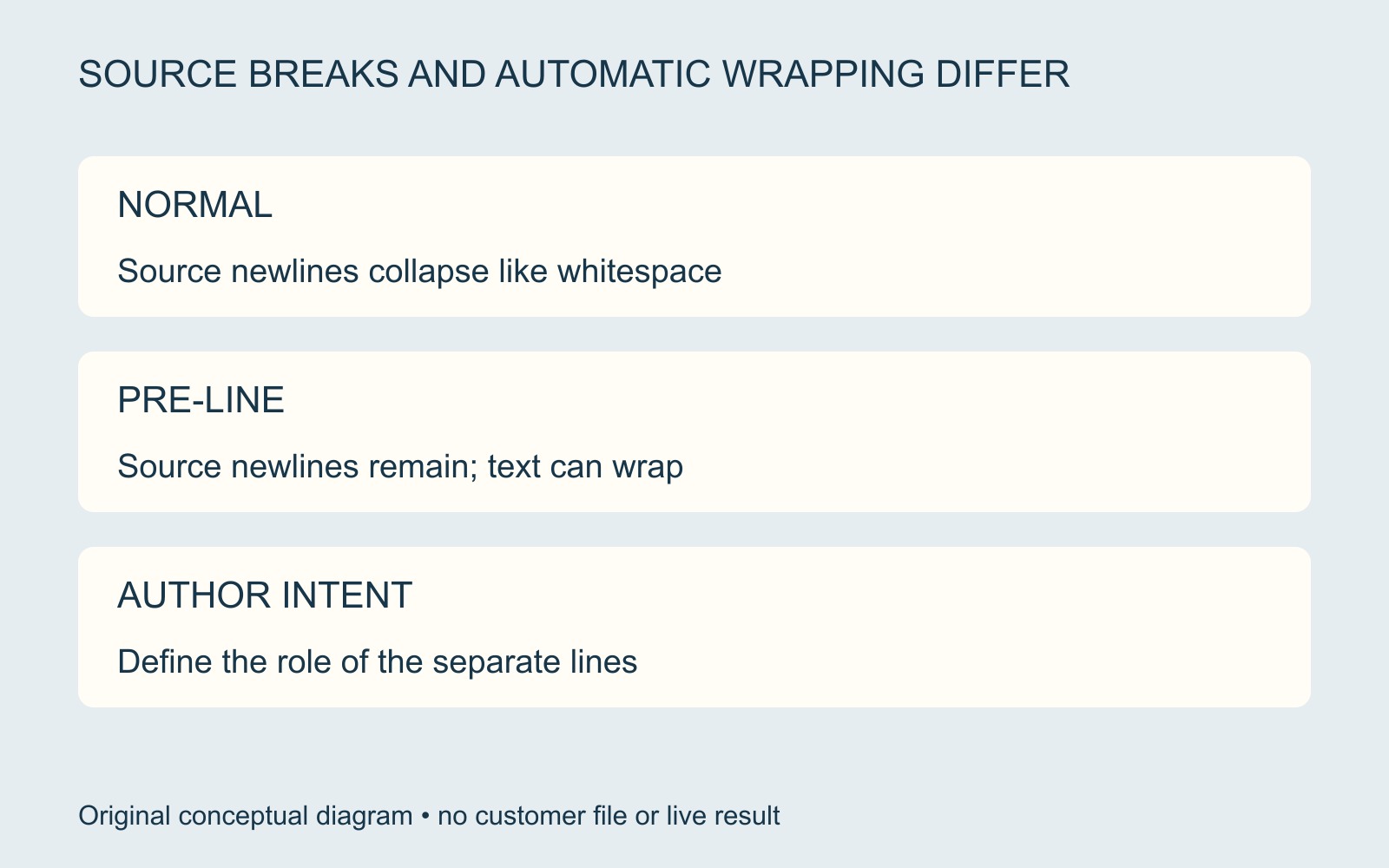
Separate stored breaks from wrapping
With CSS white-space: normal, sequences of whitespace collapse and source newlines are treated like other whitespace. The displayed text still wraps when it reaches the available width. A line ending you see on screen may therefore come from the layout rather than a break the author supplied. See MDN's white-space reference.
Compare the supplied text, the saved content and the page view. Record where the meaningful breaks should be. Avoid adding repeated spaces to imitate columns: that does not tell the maintainer what each item means.
Decide what the separate lines represent
A list of separate items, two paragraphs and a deliberate line break inside one passage carry different instructions. Describe which relationship you intend before choosing a display treatment. For example, a fictional two-line address block needs its intended line divisions explained; a paragraph copied from a narrow document may simply contain incidental wrapping.
Where retaining actual source newlines is appropriate, MDN describes pre-line: spaces collapse, newline breaks remain, and text can still wrap. That gives the maintainer a specific behaviour to consider for the affected block. It is not an instruction to preserve every newline across the site.
Read the block at its displayed width
Inspect the resulting passage at the intended wide and narrow layouts. Meaningful breaks should remain understandable even when an individual line also wraps. Check that no text disappeared during copying, and that separate items remain distinguishable.
In a website design brief, include the exact text, its location and the role of each intended break. This is a more useful request than “make the spacing match” because it explains what the reader must be able to recognise.
The original diagram compares whitespace treatments conceptually. It is not a browser test, live page or reproduced customer text.