
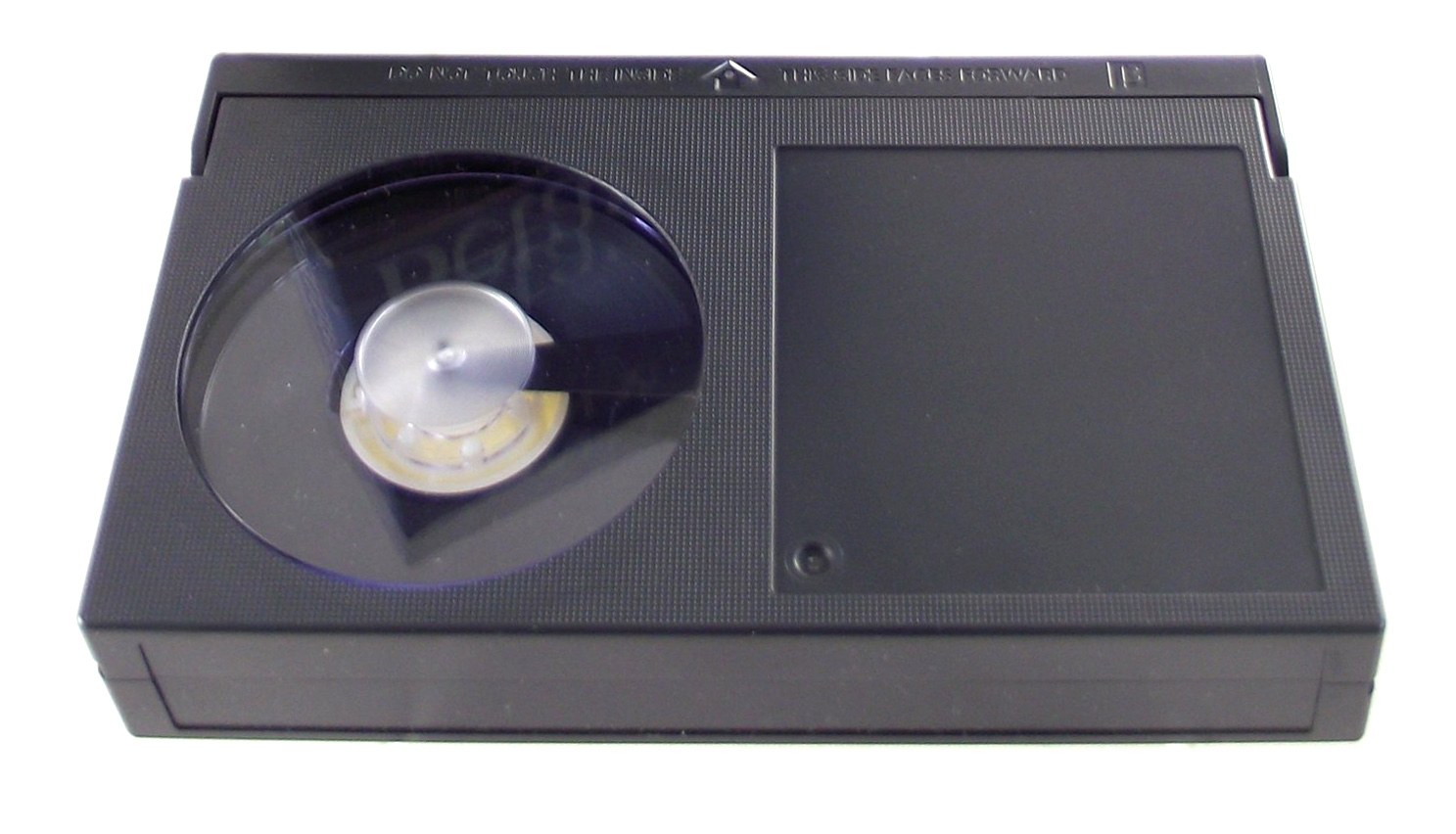

Betamax offered a striking change to television: the programme could wait for the viewer. A broadcast no longer had to disappear simply because someone was away when it was shown.
But choosing when to watch was only part of the promise. The recorder also had to capture enough of what someone wanted to see. A cassette that ran out before the end put a very practical boundary around this new control of time.
The early one-hour Betamax and two-hour VHS comparison matters for that reason. It is an opening into the format war, rather than a complete explanation of its outcome.
The promise before the verdict
Sony’s 1975 annual report, on printed page 3, presents Betamax as a home system for recording and replaying television at the consumer’s convenience. The report describes console and separate-deck versions in Japan, with a console model then being sold in the United States.
This contemporary account is useful because it has not yet become a story about losing to VHS. The product is being explained through the routine it changes: recording a broadcast and returning to it later.
A timer and a cassette could separate the time of transmission from the time of viewing. That is a different kind of convenience from a clearer picture. It gives the household another way to arrange an evening.
The report is Sony’s presentation to investors, not an independent test or a record of what every buyer did. Its significance here is the promise the company was making while the system was new.
A smaller cassette was also a choice about capacity
In its later history of the imaging business, Sony describes the 1975 SL-6300 and a cassette sized around a Japanese paperback. It calls the new freedom “time-shifting”.
The same company history places JVC’s VHS in 1976 and contrasts Betamax’s priorities of compactness and picture quality with VHS’s two-hour recording capacity. That is Sony’s retrospective framing, not a universal finding that one format always had the better picture.
Compactness is easy to understand as a virtue when a cassette is held beside a machine. Duration becomes more obvious when a recording is under way. The two qualities answer different questions: where will this fit, and will this hold the programme?
Neither question is foolish. The difficulty is that the usefulness of the whole system depends on the activity, rather than on one attractive measurement.
Betamax did not stay a one-hour format
The 1992 study by Michael A. Cusumano, Yiorgos Mylonadis and Richard S. Rosenbloom examines the rivalry through company interviews and industry records. Its recording-time comparison on printed page 77 lists early Beta at one hour, VHS at two, and Sony’s two-hour Beta in March 1977.
That change prevents a misleading version of the story. Betamax did not remain permanently limited to the first machine’s duration while an unchanged rival won. Both systems developed, and recording time was among the features that changed.
The study also examines manufacturing capacity, partner relationships, supply and the momentum of a growing market. Its analysis does not reduce the result to a single technical weakness.
There are therefore two different historical questions. An early limitation can explain a reason to hesitate at a particular moment. Explaining why a standard became dominant requires following what manufacturers and customers did after that moment too.
The recording belonged to a system
Beta and VHS cassettes were incompatible. Choosing a recorder also meant choosing which recordings could be played in it. The cassette was not simply a removable container with a neutral relationship to the machine.
For an illustration, imagine two households exchanging a recording. The programme’s subject and the length of the tape do not make that exchange work if the receiving household has an incompatible deck. This is an explanation of compatibility, not a documented anecdote about a particular family.
A useful recorder thus sat within a larger arrangement of machines, tapes and available recordings. A favourable feature on one machine could matter without deciding all of those relationships.
Sony’s retrospective records its decision to sell VHS-compatible products in 1988, while continuing to discuss its other video formats. That is a specific business response to the market. It should not be expanded into a claim that all Beta equipment or cassette production stopped that year.
The clock explains part of the story
It is tempting to turn Betamax into a neat warning: the better product lost, or one missing hour decided everything. Both versions flatten a changing contest into a verdict on a single machine.
The more interesting tension was present in the original promise. Television could now be watched later, but the new freedom depended on the capacity and compatibility of the equipment that made the recording.
A home recorder loosened the broadcast schedule’s hold on the viewer. It did not remove every constraint. Some of them were waiting inside the cassette.
Sources and perspective
Sony’s annual report is contemporary company evidence; its corporate history is a later participant account. The linked Business History Review study supplies a separate analysis of the rivalry. The distinction between an early buying constraint and the longer development of a standard is the editorial focus here, rather than a claim that one factor determined the result.