
A size guide opens over a product page. You read it, close it and continue with the keyboard. Where should the next interaction begin?
If the guide is intended to be a modal dialog, specify that complete journey. The visual appearance of a popup and its close icon do not establish how keyboard focus behaves.
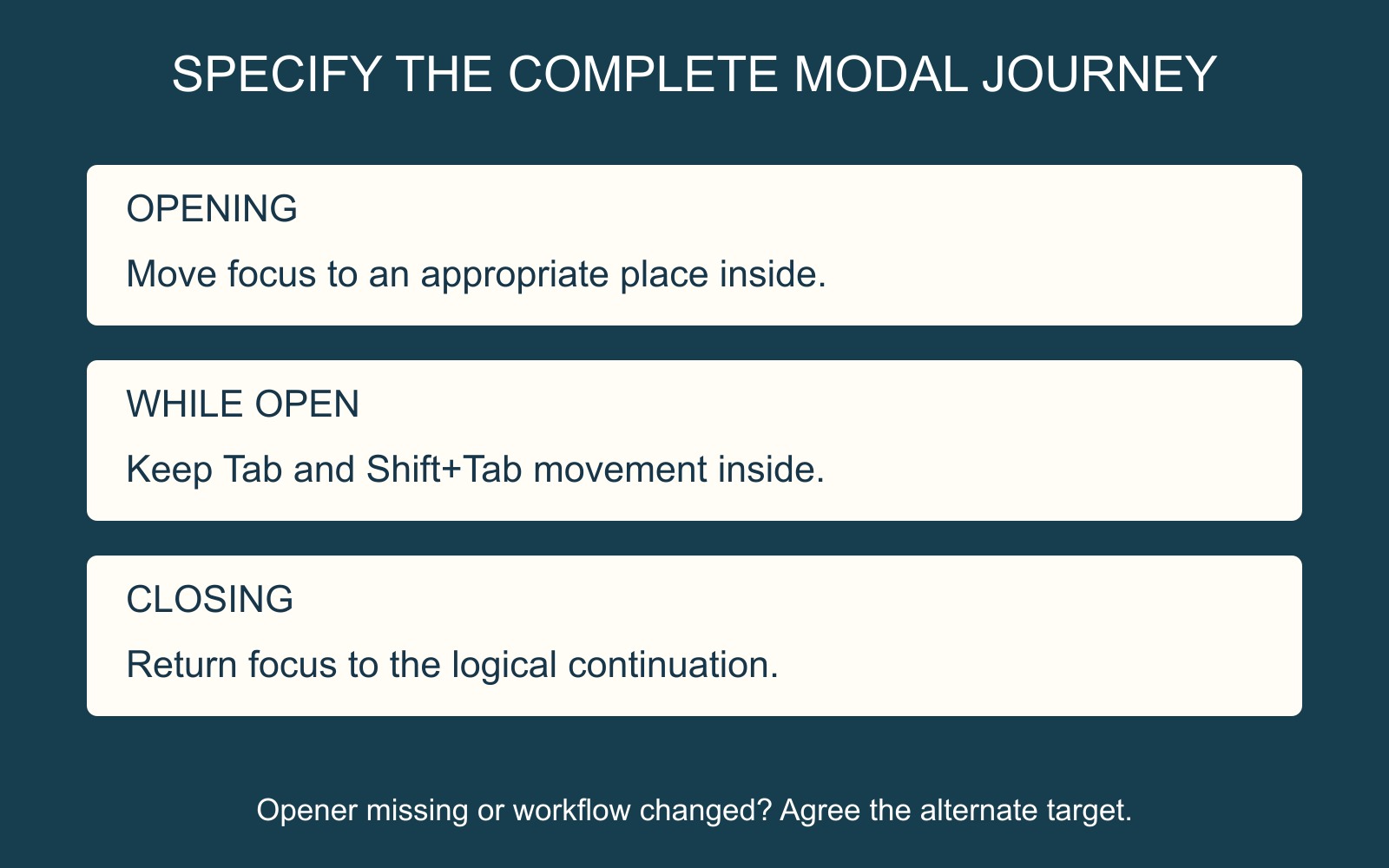
Describe opening, using and closing the dialog
W3C's modal-dialog pattern describes moving focus into the dialog when it opens, keeping Tab and Shift+Tab movement within it, and closing it with Escape. Content outside an active modal is not available for ordinary interaction.
This scope matters: not every tooltip, expanding section or floating panel is a modal dialog. Agree the intended interaction before applying modal behaviour to something that should allow continued use of the page behind it.
Choose a logical return point
The pattern normally returns focus to the element that opened the dialog. It includes exceptions where that element no longer exists or the completed task makes another next step more logical.
For our fictional size guide, returning to its opening button lets someone resume from a known point. If the dialog instead completed an action that changed the page, the provider should explain the appropriate next focus target.
Record that result in the brief. “Close the popup” describes its disappearance; “return keyboard focus to the Size guide button” describes the continuation expected in this example.
Review the route as well as the overlay
W3C's HTML dialog technique describes a native implementation route with browser-handled modal features, including focus return when the invoking element remains present. It is one technique, rather than proof that adding a tag completes every dialog requirement.
For a business website discussion, identify the opening control, the dialog's purpose, its close control and the intended continuation. Give the provider any behaviour already observed, then use the agreed review route to confirm opening focus, movement inside, closing and the return point.
A completed focus journey answers this interaction question. It does not establish accessibility for the whole page or site.
Sources: W3C's pattern and technique are linked beside their explanations. The size guide and route diagram are fictional; no website or form was tested.